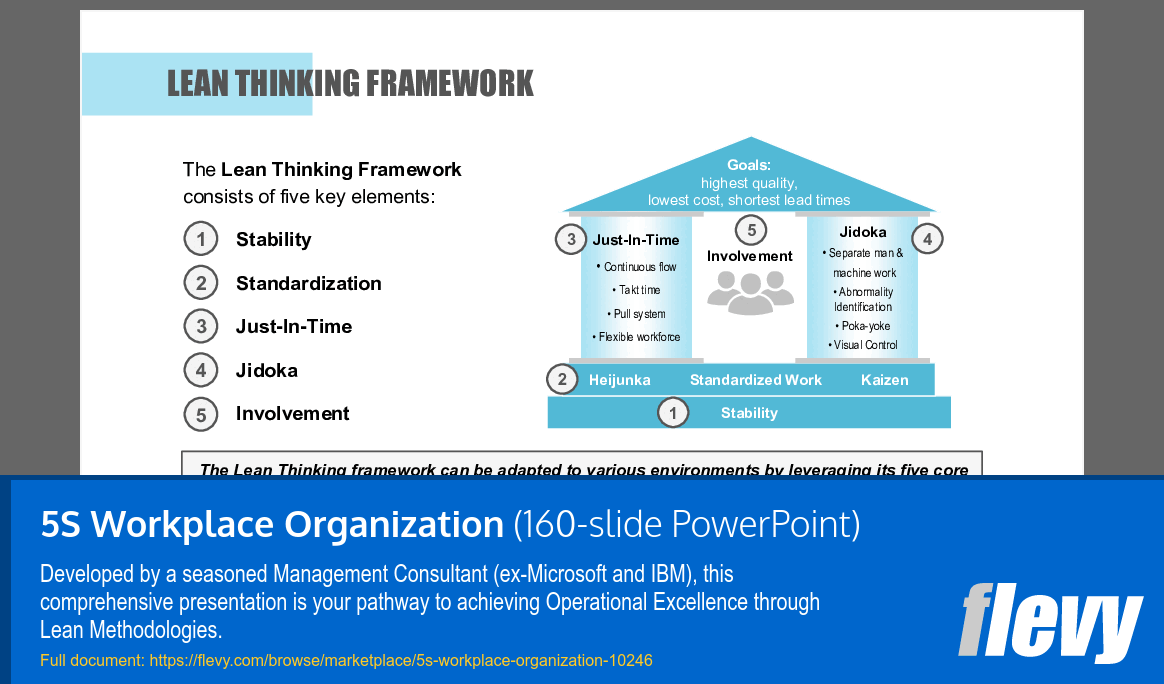
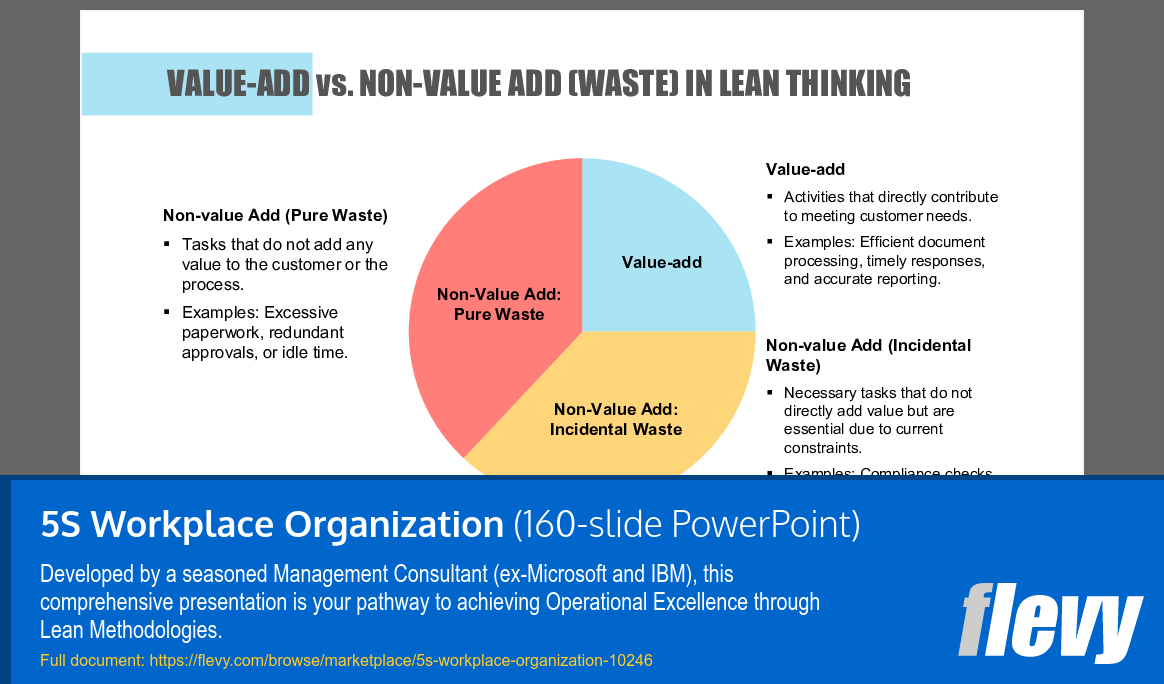

This comprehensive 5S Workplace Organization slide deck is designed for trainers, consultants, supervisors, and continuous improvement leaders seeking a ready-to-use, high-impact training resource. Structured around Lean principles and proven workplace practices, the deck provides a clear, actionable roadmap for improving efficiency, safety, and productivity across manufacturing, logistics, process, and engineering environments.

Built around universal Lean concepts and practical tools, the program helps teams understand the purpose of 5S, apply visual management effectively, implement standards that sustain improvements, and adopt a structured 5S deployment process that works in any operational setting.
Whether you're conducting an internal workshop, onboarding new teams, or launching a companywide improvement initiative, this deck equips you with the clarity, structure, and professional polish needed to deliver an engaging and results-driven 5S training experience.
||||||||||||||||||||||||||||||||||||||||||||||||||||||||||||||||||||||||||||||||||||||||||||||||||||||||||||||||||||||||||||||||||||||||||||||||||||||
This training package includes:
1. 5S Workplace Organization slide deck (PowerPoint)
2. 5S Poster (PDF, in color and monochrome, printable in A3 size)
||||||||||||||||||||||||||||||||||||||||||||||||||||||||||||||||||||||||||||||||||||||||||||||||||||||||||||||||||||||||||||||||||||||||||||||||||||||
LEARNING OBJECTIVES
1. Understand the principles of Lean Thinking and the role of 5S in creating safe, efficient, and well-organized workplaces.
2. Apply 5S and visual management techniques to improve workflow, reduce waste, and strengthen operational performance.
3. Implement and sustain 5S using standardization tools, structured processes, and practical deployment steps.
CONTENTS
1. Foundations of Lean Thinking
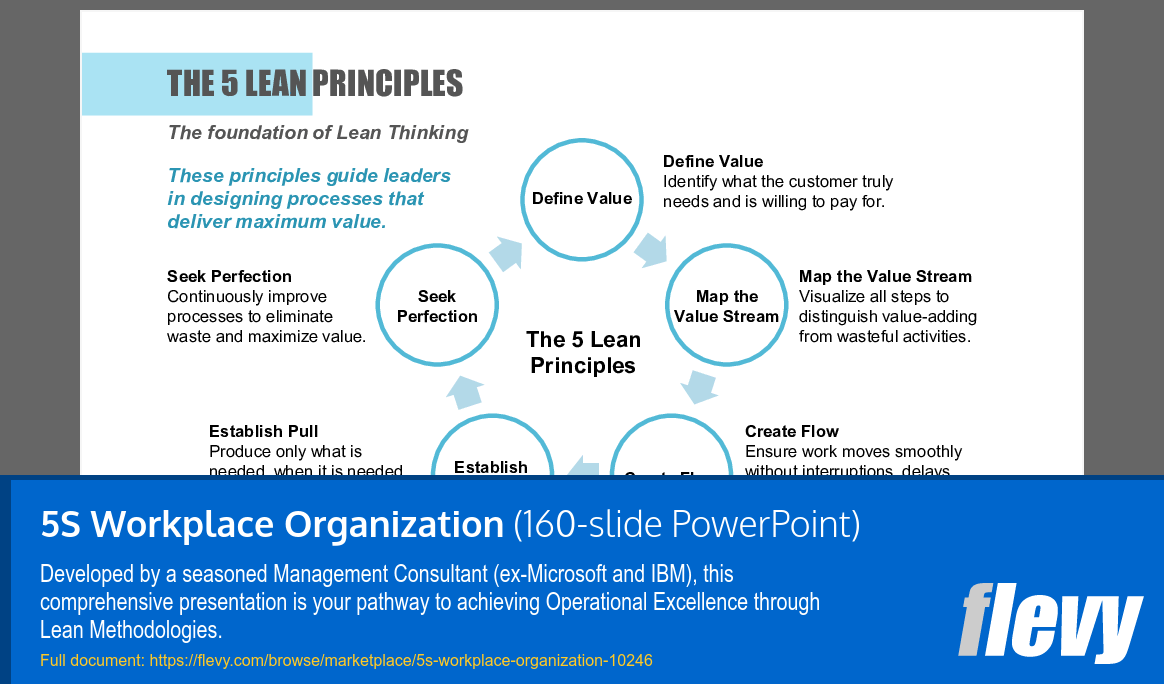
• A concise introduction to Lean's origins, core principles, and the eight forms of waste. This section helps participants see why 5S is more than housekeeping—it is a gateway to efficiency, safety, and operational excellence.
2. Introduction to 5S Principles
• An easy-to-understand breakdown of Sort, Set in Order, Shine, Standardize, and Sustain. Includes everyday examples, best practices, and workplace applications to make concepts simple and relatable.
3. Visual Management in 5S
• Shows how labels, markings, color codes, signages, and visual cues create clarity, reduce errors, and improve communication. Participants learn how to design workplaces that "speak for themselves."
4. Standardization – SOPs, Standard Work & Checklists
• Explains how standards and routines keep 5S improvements from fading. Covers SOP writing, housekeeping checklists, and visual standards that promote consistency and reliability.
5. 5S Implementation Process
• Provides a clear, step-by-step 5S deployment roadmap. From planning, auditing, training, and documentation to sustainment, this section equips teams to roll out 5S systematically and successfully.
Workshop Activities Included:
1. 5S Gemba Walk – Observe real workplace conditions to identify wastes and improvement opportunities.
2. 5S Challenge – Redesign work areas using 5S and visual management concepts.
3. 5S Action Planning – Create a realistic 100-day improvement plan for immediate implementation.
Got a question about the product? Email us at support@flevy.com or ask the author directly by using the "Ask the Author a Question" form. If you cannot view the preview above this document description, go here to view the large preview instead.
Executive Summary
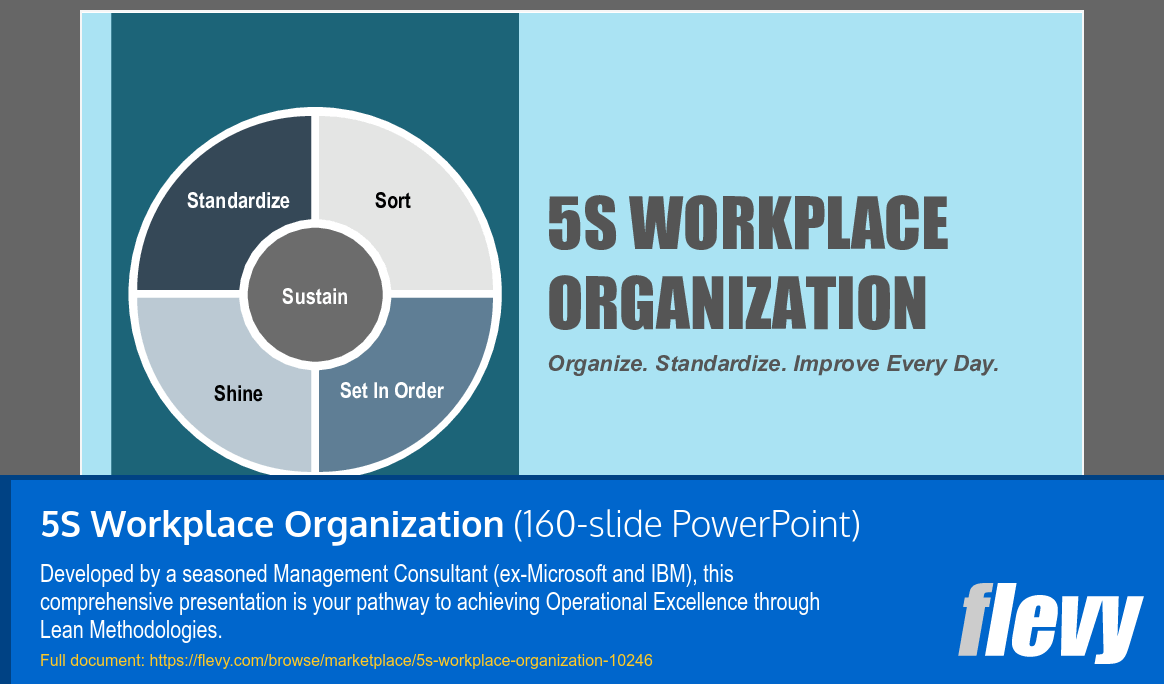
The 5S Workplace Organization presentation is a strategic framework designed to enhance operational efficiency through Lean methodologies. Developed by a Certified Lean Six Sigma Black Belt with extensive experience at Microsoft and IBM, this presentation provides actionable insights into the 5S principles: Sort, Set in Order, Shine, Standardize, and Sustain. By implementing these principles, organizations can create a safer, more organized workplace that minimizes waste and maximizes productivity. This deck serves as a comprehensive guide for leaders aiming to instill a culture of continuous improvement and operational excellence.
Who This Is For and When to Use
• Operations Managers focused on improving workplace efficiency
• Lean Practitioners implementing continuous improvement initiatives
• Safety Officers aiming to enhance workplace safety standards
• Team Leaders responsible for training and development in Lean practices
Best-fit moments to use this deck:
• During Lean training sessions for new employees
• When launching a 5S initiative within a team or department
• For conducting workshops aimed at improving workplace organization
• In strategy meetings to discuss operational improvements and waste reduction
Learning Objectives
• Define Lean Thinking and articulate how 5S supports efficient workplace organization
• Implement and sustain 5S through standardized processes and structured deployment
• Apply visual management tools to identify and eliminate waste in workflows
• Foster a culture of continuous improvement through employee engagement in 5S practices
• Develop clear standard operating procedures (SOPs) to maintain 5S standards
Table of Contents
• Foundations of Lean Thinking (page 1)
• Introduction to 5S Principles (page 2)
• Visual Management in 5S (page 3)
• Standardization – SOPs, Standard Work & Checklists (page 4)
• 5S Implementation Process (page 5)
Primary Topics Covered
• Lean Thinking Foundations - Understanding Lean as a method for maximizing value and minimizing waste, derived from the Toyota Production System.
• 5S Principles - Detailed exploration of the 5 principles: Sort, Set in Order, Shine, Standardize, Sustain, and their role in workplace organization.
• Visual Management - Techniques for using visual cues to enhance communication and workflow efficiency.
• Standardization - Importance of SOPs and standardized work to maintain consistency and quality in operations.
• 5S Implementation Process - Step-by-step guide to launching and sustaining a 5S initiative within an organization.
Deliverables, Templates, and Tools
• 5S Audit Checklist for assessing workplace organization
• Standard Operating Procedure (SOP) templates for each 5S principle
• Visual management tools, including signage and labeling systems
• Training materials for conducting 5S workshops
• Action planning worksheets for implementing 5S initiatives
Slide Highlights
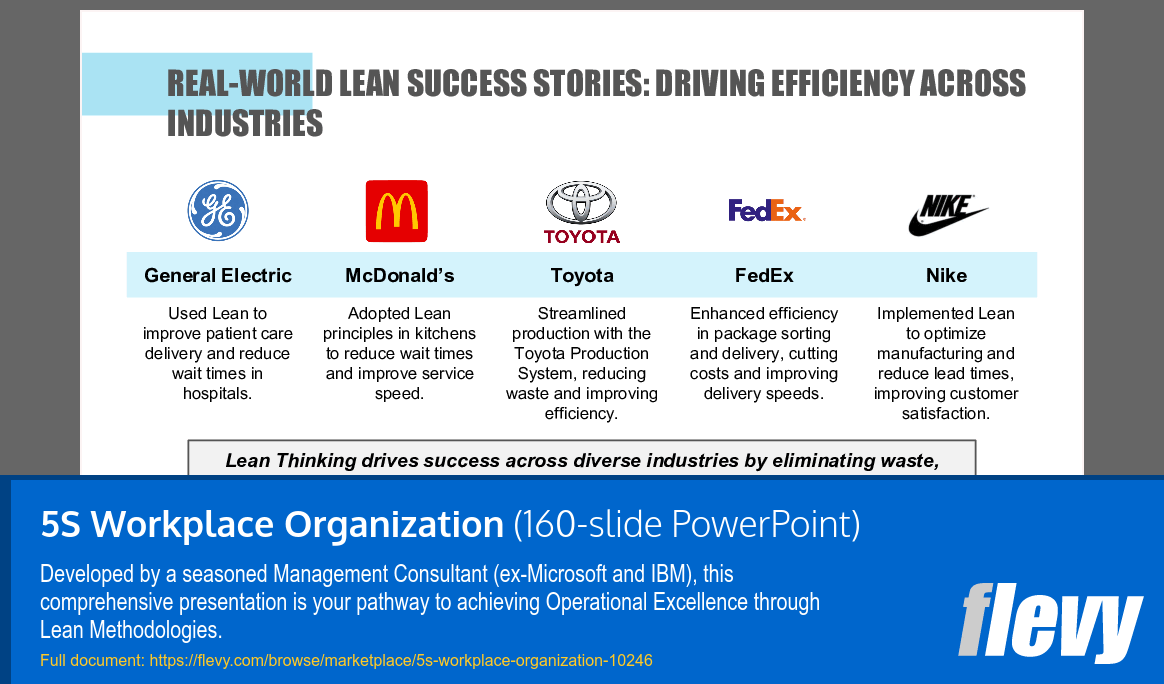
• Overview of Lean Thinking and its relevance across industries
• Visual representation of the 5S principles and their interconnections
• Examples of successful 5S implementations in various organizations
• Practical tips for each 5S principle, including sorting strategies and organization methods
• Audit results and recognition programs to sustain 5S practices
Potential Workshop Agenda
Introduction to Lean Thinking (30 minutes)
• Discuss the origins and principles of Lean Thinking
• Explore the importance of waste reduction in operational excellence
5S Principles Overview (45 minutes)
• Introduce each of the 5S principles with real-world examples
• Engage participants in identifying areas for improvement in their workspaces
Visual Management Techniques (30 minutes)
• Discuss the role of visual management in supporting 5S
• Provide examples of effective visual tools and their applications
Action Planning and Next Steps (30 minutes)
• Facilitate group discussions on implementing 5S in participants' areas
• Develop action plans with assigned responsibilities and timelines
Customization Guidance
• Tailor the presentation to reflect specific organizational goals and challenges
• Incorporate company-specific examples and case studies to enhance relevance
• Adjust the workshop agenda based on participant experience levels and needs
Secondary Topics Covered
• The role of employee engagement in sustaining Lean initiatives
• Integration of 5S with other continuous improvement practices
• Common pitfalls in 5S implementation and best practices to avoid them
• Strategies for conducting effective 5S audits and assessments
FAQ
What is the purpose of 5S?
5S aims to create a clean, organized, and efficient workplace by eliminating waste and enhancing safety through structured organization.
How can I sustain 5S practices in my organization?
Sustainability can be achieved through regular audits, employee training, and fostering a culture of continuous improvement and accountability.
Is 5S applicable only in manufacturing environments?
No, 5S can be applied in various settings, including offices, laboratories, and service industries, to improve organization and efficiency.
What are some common challenges in implementing 5S?
Common challenges include resistance to change, lack of management support, and insufficient training for employees on 5S principles.
How do I measure the success of a 5S initiative?
Success can be measured through audits, employee feedback, and improvements in efficiency, safety, and overall workplace organization.
What tools can help in visual management?
Tools include signage, color-coded labels, floor markings, and visual boards that enhance communication and workflow visibility.
How often should 5S audits be conducted?
Regular audits should be conducted at least monthly, with additional spot checks as needed to ensure ongoing compliance and improvement.
Can 5S be integrated with other Lean tools?
Yes, 5S can complement other Lean tools such as Kaizen, TPM, and visual management practices to enhance overall operational efficiency.
Glossary
• 5S - A Lean methodology focusing on workplace organization and standardization.
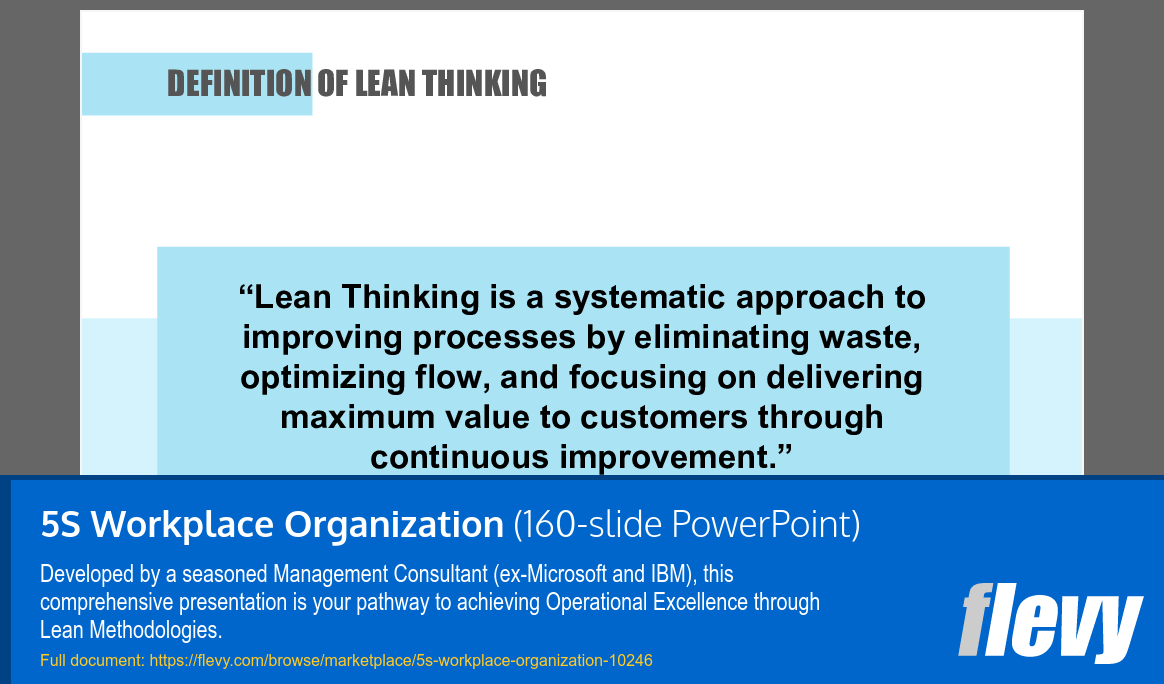
• Lean Thinking - A systematic approach to improving processes by eliminating waste and optimizing flow.
• Standard Operating Procedure (SOP) - A documented step-by-step instruction for performing a task consistently.
• Visual Management - The use of visual cues to enhance communication and workflow efficiency.
• Waste - Any activity that does not add value to the product or service.
• Kaizen - A continuous improvement philosophy that encourages all employees to contribute ideas for enhancing processes.
• Audit - A systematic examination of a process or system to ensure compliance with standards.
• Standard Work - The best-known method to perform a task, focusing on efficiency and quality.
• Poka-yoke - A mistake-proofing technique designed to prevent errors in processes.
• Shadow Board - A visual tool used to organize tools and equipment, indicating where each item belongs.
• Gemba Walk - A practice where leaders observe work processes in real-time to identify areas for improvement.
• Visual Control - Tools and techniques used to make processes transparent and easily understandable.
• Just-In-Time (JIT) - A production strategy that strives to improve a business's return on investment by reducing in-process inventory and associated carrying costs.
• Total Productive Maintenance (TPM) - A holistic approach to maintenance that aims to achieve perfect production with no breakdowns, defects, or accidents.
Source: Best Practices in Visual Workplace PowerPoint Slides: 5S Workplace Organization PowerPoint (PPTX) Presentation Slide Deck, Operational Excellence Consulting
This document is available as part of the following discounted bundle(s):
Save %!
Problem Solving Essentials Toolkit
This bundle contains 4 total documents. See all the documents to the right.
|
Receive our FREE presentation on Operational Excellence
This 50-slide presentation provides a high-level introduction to the 4 Building Blocks of Operational Excellence. Achieving OpEx requires the implementation of a Business Execution System that integrates these 4 building blocks. |